


Baby sleep · 7 min read
How to Dress Your Baby for Sleep: Layers, Sleepwear, and Room Temperature
Choose baby sleepwear using room conditions, product instructions, fit, and comfort checks. Understand TOG ratings and avoid overheating.
Published by the Bambii Editorial Team
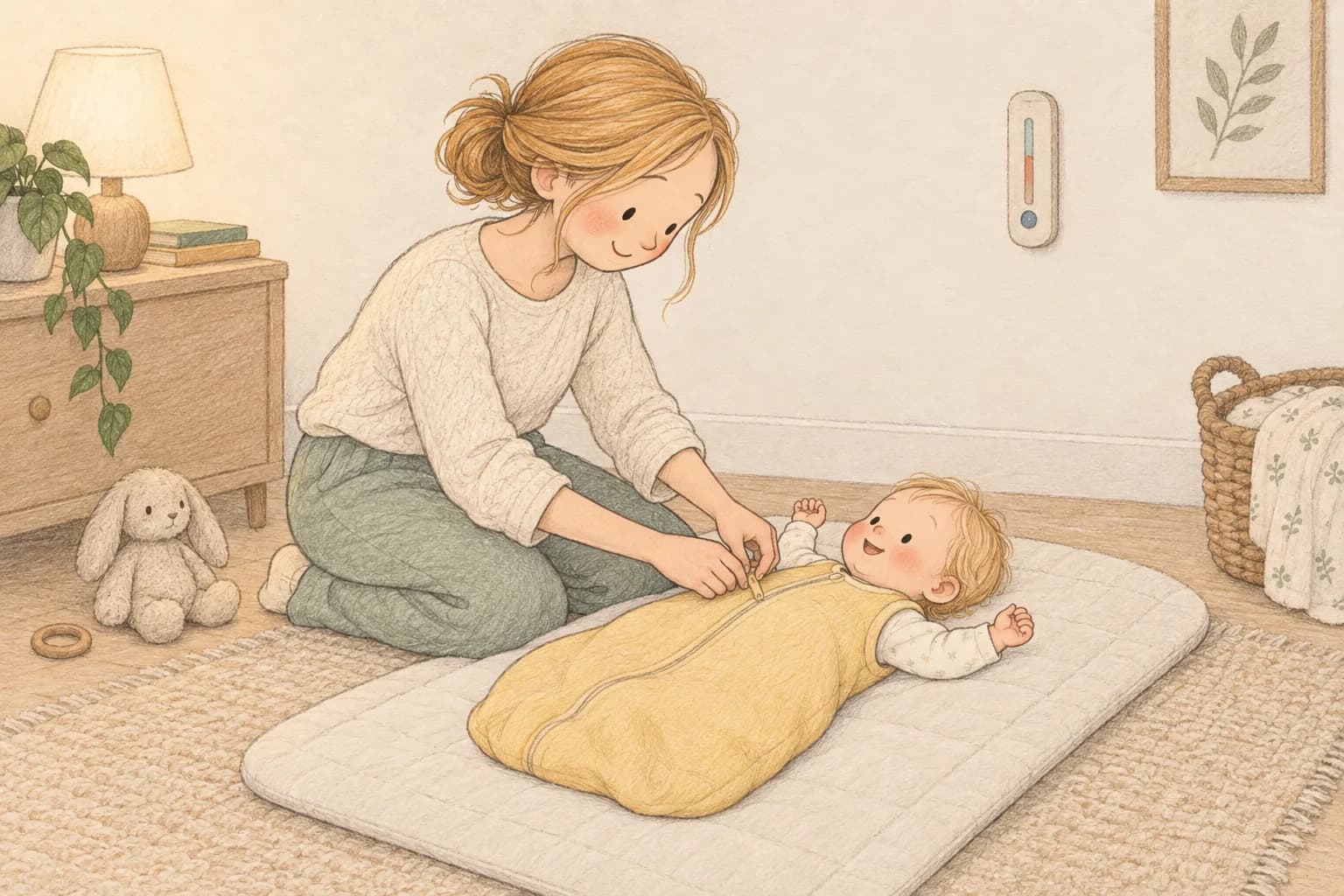
You have the pajamas in one hand and a sleep sack in the other. The room thermometer says one thing, the clothing chart says another, and your baby's feet feel cool. Suddenly getting dressed for bed seems to require a qualification in insulation.
A simpler approach is to consider the room, the actual sleepwear, and your baby together. Choose well-fitting, unweighted clothing, follow the product's guidance, and check for overheating. There is no universal outfit chart that can account for every garment, room, and baby. This guide explains the decisions that matter without asking you to calculate the perfect combination at midnight.
What should a baby wear to sleep?
Suitable sleepwear might be a lightweight sleeper with an appropriately fitted sleep sack, or fewer layers in a warmer room. The combination depends on the garment and conditions. A sleep sack is not compulsory; its usefulness is providing wearable warmth without a loose blanket.
The AAP's safe-sleep guidance gives a general rule of no more than one extra layer compared with what an adult would need to be comfortable in the same environment. Think of that as a starting point, not permission to keep adding layers on top of an already warm sleep bag.
Use a clear sleep space with a firm, flat mattress and a fitted sheet. This article follows the AAP approach of keeping loose blankets and other soft items out of an infant's sleep space. Place your baby on their back for every sleep and leave their head uncovered indoors.
Start with the room you are actually using
A nursery can feel different from the hallway, and a room may warm up in afternoon sun even when the weather outside feels mild. A room thermometer gives you more useful information than the season on the calendar. Keep the thermometer and its cords safely out of your baby's reach.
UK guidance from the NHS describes 16–20°C, about 61–68°F, as a comfortable sleep-room range. This is a guide, not a universal thermostat requirement or a guarantee against overheating. Follow local guidance and individualized advice if your baby has a medical reason for different care.
A room warmer than that range does not mean you should keep the same winter outfit and simply hope for the best. Reassess clothing and the sleep bag's instructions. Likewise, a colder room is not a reason to put a hot-water bottle, electric blanket, or heater next to the crib.
Understand what a TOG rating can—and cannot—tell you
TOG describes insulation. A higher number generally indicates a warmer product. It does not tell you that any garment with that rating works with every possible pair of pajamas.
The Lullaby Trust explains why it does not offer a universal temperature-to-clothing chart: materials, combinations of layers, and individual babies differ. Use the instructions for the particular sleep bag, including what clothing the manufacturer recommends underneath.
This also explains why copying an outfit from a photograph can be misleading. The other family's bag might have a different lining, their room may be warmer, or the baby may have different needs. The relevant comparison is your product in your room, not the brand's color or how cozy it looks.
Check the fit before thinking about extra warmth
A sleep bag should fit around the neck and shoulders so your baby cannot slip down inside it. Use the manufacturer's weight and size requirements rather than assuming an age label is enough. The Lullaby Trust's dressing guide explains fit, layering, and temperature checks.
Before using a garment, look at the openings, fastenings, and condition. If it is too large, has damaged closures, or does not fit according to the instructions, choose another suitable option. Do not make a loose neck opening “work” by improvising ties or pins.
A practical bedtime preparation is to lay out the actual sleepwear you intend to use. That helps another caregiver see whether the plan includes a sleep sack, rather than adding one over an outfit chosen for use on its own.
How to check whether your baby is too warm
Feel your baby's chest or the back of their neck. Hands and feet often feel cooler and are not a reliable reason, by themselves, to add more clothing. Hot or sweaty skin suggests you should reassess warmth and remove an unnecessary layer.
Do not use a touch check to diagnose or rule out a fever. If your baby seems unwell or unusually hot, check their temperature appropriately and follow medical guidance. A sleepwear adjustment cannot address an infection.
Three everyday situations
| What you notice | A useful next step |
|---|---|
| Cool hands, but the chest feels comfortable and your baby seems well | Do not automatically add another layer just for the hands |
| The room is warmer than it was at bedtime | Recheck the sleepwear combination and your baby's chest or neck |
| Your baby is sweaty or hot under several layers | Reduce excess warmth, reassess, and consider illness if they remain hot or seem unwell |
These are prompts to look again, not a substitute for checking your baby. You do not need to wake them repeatedly to complete a chart; use ordinary care checks and reassess when the room or their condition changes.
Sleepwear choices to avoid
Do not use weighted sleep sacks, weighted swaddles, or weighted blankets for babies. Avoid doubling up sleep bags. More fabric is not automatically more protective, and layers can trap additional warmth.
Remove indoor hats, and keep accessories such as bibs and cords out of the sleep setup. Do not place a loose blanket over a sleep bag to “finish” the outfit. If more warmth is needed, revisit appropriate clothing or the product choice using its instructions.
Swaddles have a separate stopping point
An ordinary arms-free sleep sack is different from a swaddle that restricts the arms. Stop swaddling when your baby shows signs of trying to roll. The AAP's swaddling guidance explains this precaution. Do not wait for a successful roll caught on camera.
If the product has several modes, read the instructions carefully. A marketing name that includes “sleep sack” does not tell you whether a particular configuration restricts movement.
What if my baby has a fever?
Do not bundle an unwell baby in extra clothes to sweat out a fever. At the same time, avoid stripping them or using cold sponging as a treatment. Follow NHS fever guidance and seek advice based on your baby's age and symptoms.
A baby under three months with a temperature of 38°C / 100.4°F or higher needs urgent medical assessment. Serious breathing difficulty, blue or gray color, or being very difficult to wake requires emergency help. If you are worried, seek advice rather than trying a different TOG rating first.
Keep the handoff simple
Caregivers do not need identical instincts about temperature; they need a shared plan based on the product and the baby's condition. A useful note might say: “Room was warm tonight, so we used the lighter outfit listed in this bag's instructions. Please check the room again if it cools significantly.”
Bambii can keep routine notes together, but it does not monitor body temperature or judge whether clothing is safe. Keep product instructions available to everyone who handles bedtime. Our shared-care routine guide can help with those handoffs.
The aim is comfortable, appropriate sleepwear in a safe sleeping space. Start with the room and the garment, then check your baby. A manageable habit is more useful than collecting another universal chart.
Sources checked September 24, 2026. Cover illustration generated with AI.