


Baby sleep · 7 min read
White Noise for Babies: Volume, Placement, and Safer Use
Learn how to approach baby sound machines, including placement, volume, short use, safe sleep, and the limits of product claims.
Published by the Bambii Editorial Team
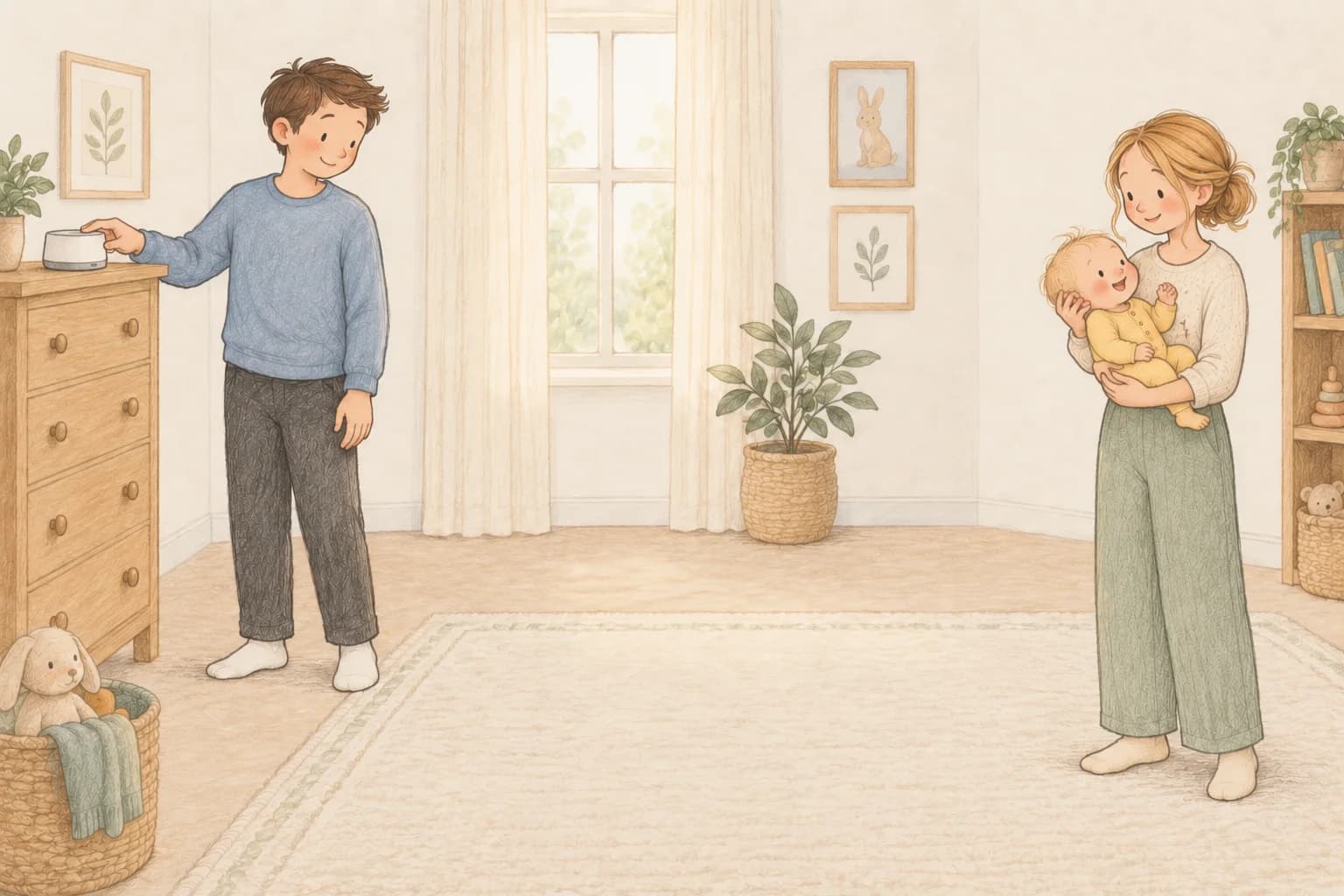
White noise is optional. If you use a baby sound machine, keep it quiet, place it well away from your baby's head, and limit how long it plays. The American Academy of Pediatrics advises placing sleep machines as far away as possible and using them only for a short time. A machine marketed for babies is not automatically safe at every setting, and louder sound is not a better sleep strategy.
Perhaps the dog barks just as your baby settles, or an older sibling's evening overlaps with the first sleep of the night. A sound machine can seem like a simple solution. The useful question is whether it helps with a particular environmental problem without adding unnecessary noise exposure.
You do not need to buy one to create a good routine. This guide explains what to check if you already use one or are considering it, and why neither a volume percentage nor a promising product description tells the whole story.
Start with the sound you are trying to change
Describe the problem before choosing a device. Is a television audible through the wall? Does a door slam? Is the room generally quiet, but your baby wakes to feed? Those situations call for different responses.
For a television, the first practical step may be turning it down or moving the evening viewing elsewhere. For a door, it may be asking other family members to close it gently. For a baby waking without an obvious noise, a louder background sound does not tell you why they woke.
Try a small household conversation: “The nap overlaps with the school pickup. Could we keep bags and shoes out of this hallway?” This changes the source of the disruption without adding a new sleep requirement. It is an example to adapt, not a promise that ordinary household sounds can be eliminated.
Leave room for normal baby care. Feeding, comfort, illness, and development still matter when the room is quiet. Our guide to changing sleep routines can help organize those observations.
Why the loudest setting deserves caution
In a 2014 Pediatrics study of infant sleep machines, researchers measured 14 devices at maximum volume and several distances. The devices could produce potentially hazardous sound levels. This was a study of device output, not a finding that every baby exposed to white noise develops hearing loss.
That distinction matters. The study supports caution about how equipment is used; it does not diagnose harm from a parent's past use. It also does not establish that a currently sold model, a certain dial position, or one particular sound is safe for every duration.
Avoid treating a product's “baby” label as a substitute for understanding its controls. Before using a machine, work out how to lower the volume, turn it off, and set a timer if one is available. Check whether restarting it restores the previous setting. Those are practical checks you can make without testing it beside your baby's ear.
Think about placement, volume, and duration together
A careful setup considers all three. Moving a machine away is useful, but it is not a reason to turn it up to compensate. Keeping a low setting is useful, but it is not a guarantee about prolonged exposure.
Put equipment on a stable surface well away from the sleep space, with cords and small parts inaccessible. Do not put a speaker, phone, or device inside the cot. Follow the product's electrical and placement instructions, and reconsider access as your child becomes mobile.
For duration, follow the AAP's short-use approach rather than automatically running sound all night. A timer can make that intention easier to follow. The guidance does not give one universally safe number of minutes for every machine and room, so this article does not invent one.
If you cannot arrange a suitable position or use the device quietly and briefly, leaving it off is a reasonable option. A sound machine is an optional tool, not something the room must contain.
Why “30 percent volume” is not a safety measurement
A percentage describes a control setting on that particular device. It does not, by itself, describe the sound reaching your baby. Different machines and recordings can behave differently, and the distance between the speaker and the baby matters.
This is why copying another family's dial position is less useful than understanding your own setup. The same applies to advice such as “as loud as a shower.” A familiar comparison is not a measurement at your baby's sleeping position.
If you want help assessing exposure, ask your pediatrician or an audiologist what measurement and limits are appropriate. Do not use a guessed decibel figure to justify louder or longer use. A reading also needs context: which device, where it was measured, and how long sound plays.
You can bring a photograph of the empty room setup and the machine's instructions to that discussion. Keep the baby out of any demonstration involving louder settings.
Keep safe sleep separate from sound choices
Whatever you decide about sound, the sleep surface still matters. For infants, follow AAP safe-sleep guidance: place your baby on their back on a firm, flat surface in their own appropriate sleep space, with a fitted sheet and no loose bedding or soft objects.
Do not add a soft toy with a built-in speaker to the cot, put a phone under bedding, or change the mattress position to accommodate equipment. A calmer-sounding room does not make an unsafe sleep arrangement safe.
Our bassinet-to-crib guide covers the separate questions of equipment limits and changing sleep spaces. Those decisions should follow the baby's development and the manufacturer's instructions, not where a sound machine fits best.
Make the plan easy for another caregiver
A handover should explain the setup, not just say “turn on the noise.” You might write: “The machine stays on that dresser. Use the low setting and timer shown. Please don't move it closer or raise the volume if settling takes longer.”
Include what to do instead when the baby is unsettled: check their needs, offer appropriate care, and contact you or a healthcare professional when there is a concern. A device should not become a reason to postpone responding.
For a different room or a trip, reassess the arrangement rather than copying the old setting automatically. A small guest room may not have a suitable place for the device. Keeping the familiar bedtime sequence without using the machine is another option.
The Bambii Sleep Academy offers general education about routines and sleep environments. It does not measure sound exposure or replace hearing advice.
Notice whether it helps without turning sleep into an experiment
Keep any notes brief: the environmental sound, whether the device was used, and what actually happened. “Door closed loudly; baby stirred” is more informative than “white noise failed.” One longer nap does not prove that a device caused it, just as one short nap does not prove that the volume was wrong.
If you want to stop using it, preserve the rest of the familiar routine and see what support your baby needs. There is no need to replace it with an increasingly elaborate collection of sounds. Choose a manageable approach and seek help if sleep difficulties are persistent or the family is struggling.
If you are worried about hearing or your child's response to sounds, arrange an assessment. Do not test hearing by making loud sounds near their ears, and do not assume either damage or normal hearing from a reaction at home.
Common questions
Does every newborn need white noise?
No. It is optional. Start with safe sleep and responsive care; consider the actual household noise before adding equipment.
Is pink or brown noise automatically safer?
A different name or tone is not a substitute for considering exposure. Do not assume a sound is safe to play louder or longer because it is described as gentler.
Can I leave it on all night?
That is not the approach recommended in the AAP parent guidance linked above. Choose short use and discuss uncertainties with a qualified professional rather than treating continuous playback as necessary for sleep.
Sources checked October 2, 2026. General education from the Bambii Editorial Team; not individually reviewed by a clinician. Read our editorial standards or send a correction to team@bambii.app. Cover illustration generated with AI.