


Baby development · 7 min read
When Do Babies Start Crawling? Different Paths and Ways to Support Movement
Explore common crawling ages, different movement styles, supportive floor play, home safety, and when to discuss development with your clinician.
Published by the Bambii Editorial Team
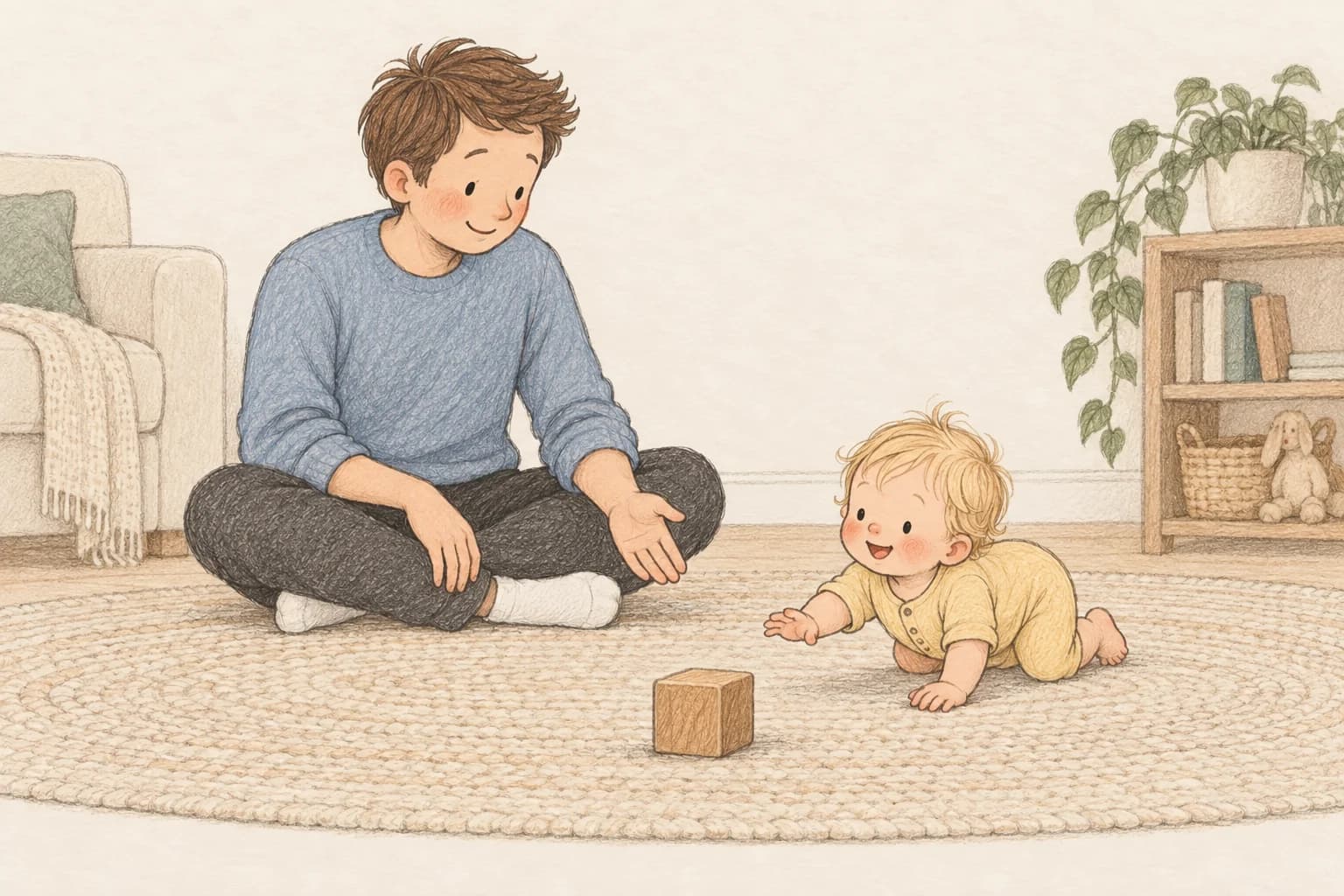
One baby in your parent group is crossing the room on hands and knees. Another is rolling toward everything. Yours is sitting happily in the middle of the mat, studying a sock. It is very easy for “when do babies start crawling?” to become “should I be worried about mine?”
Many babies learn to crawl during the second half of the first year, but there is a broad range of timing and movement styles. Hands-and-knees crawling is one route through development, not a deadline every baby follows. The useful questions are how your baby is progressing overall, whether they use both sides of their body, and whether there are concerns to discuss with their clinician.
When do infants usually start to crawl?
The AAP describes crawling as commonly developing between seven and ten months. It also describes alternatives such as bottom-shuffling or moving along the tummy, and notes that some children do not crawl in the traditional way.
Research shows why one small age range cannot tell the whole story. The WHO Motor Development Study reported an estimated first-to-99th-percentile window of about 5.2–13.5 months for hands-and-knees crawling among children who achieved that milestone. That wide statistical range is not a screening rule or a reason to postpone asking about a concern.
A common age range can provide context. A pediatric assessment considers more: other skills, opportunities to move, medical history, and how the baby moves. You can be reassured that variation exists while still taking your own observations seriously.
Crawling does not always look like the demonstration video
Before moving forward, a baby may pivot, rock, push backward, or use another way to reach an interesting object. Progress can look untidy. The goal is exploration, not a symmetrical performance on command for a camera.
Instead of counting only the day that “proper crawling” begins, notice what is changing. Can your baby reach farther? Shift position? Move toward a toy in some way? Are they using both arms and legs? Those observations are more informative than comparing one photograph with another baby's milestone announcement.
If movement consistently seems one-sided, your baby appears unusually stiff or floppy, or a skill they used to have disappears, bring that to their clinician. Do not explain a persistent concern away as simply “their crawling style.”
Does skipping crawling cause later learning problems?
The AAP addresses this question directly: evidence does not support the old claim that skipping crawling by itself causes later reading problems. Development does not have to follow one exact sequence to be healthy.
That reassurance has a boundary. It does not mean every movement concern should be ignored. It means an individual skipped skill should be considered in the wider developmental picture, rather than used to predict your child's future learning.
How to support movement without turning play into training
Make room for supervised floor play
Offer time on a clean, firm, safe floor area while your baby is awake. Be nearby and join them. A few appealing objects are enough; you do not need to build an obstacle course or purchase equipment that promises to teach crawling.
The AAP's baby-activity guidance emphasizes opportunities for active play and development. Keep the experience responsive. If your baby is tired, hungry, or upset, change the activity rather than pushing through to complete a session.
Let curiosity do some of the work
You can sit nearby, smile, talk, or place a suitable toy within an inviting distance. Give your baby a chance to reach, then help if they become frustrated. This is play together, not a test of whether they want the toy enough.
For example, place a favorite large soft ball a short distance in front of them while you stay close. If they reach and then lose interest, that is still an ordinary play experience. You do not need to repeatedly move it farther away or turn every attempt into a lesson.
Allow different comfortable positions
Supervised awake tummy time, reaching from sitting when developmentally ready, and freely changing position can all be part of play. Do not force your baby into a crawling position or hold their limbs in place to make them practice. Ask for individual guidance if a position is consistently difficult or uncomfortable.
Tummy time is an awake activity. Continue placing your baby on their back for sleep. A baby practicing movement during the day does not need a new sleep position at night.
Skip seated wheeled walkers
The AAP advises against baby walkers because of injury risks. They are not a necessary step toward crawling or walking. Free, supervised floor exploration is a simpler place to start.
Make the room ready before the first surprise journey
A baby does not need to crawl neatly to reach something unsafe. Rolling, shuffling, and stretching can change what is within reach overnight.
Get down to floor level and look at the room from there. Check for small objects, cords, accessible medicines or cleaning products, and furniture that could tip. Keep button batteries and small powerful magnets securely out of reach. Plan safe access around stairs and doors before mobility becomes faster.
The U.S. Consumer Product Safety Commission's Anchor It guidance explains securing furniture and televisions. Childproofing reduces hazards, but it does not replace supervision. A safe play area also needs to be rechecked as your baby gains new ways to move.
When to ask about development
You can bring a concern to your pediatrician at any time; you do not need to wait for a milestone deadline. The CDC's nine-month checklist includes sitting without support and getting into a sitting position. It recommends acting early when a child is not meeting milestones, loses skills, or you have concerns.
Crawling is not a standalone verdict. Describe the whole pattern: what your baby can do, what seems difficult, whether both sides participate, and what has changed. A brief video can help show something that does not happen during an appointment, if your clinician finds that useful. Do not delay urgent care to make a recording.
For babies born prematurely, clinicians commonly use adjusted age when considering early development. The AAP explains adjusted age and developmental milestones. Ask your baby's care team how to apply it, especially if they already have a follow-up plan.
What is worth keeping in a note?
Record a new skill or a concern in everyday words: “moves toward toys by rolling,” “gets into sitting,” or “seems to avoid putting weight through the left arm.” Dates can help you remember when you first noticed it. A list of comparisons with other babies is less helpful.
If you use Bambii for routine notes, keep those observations alongside the day's context. Bambii does not assess developmental progress or replace screening. Its role is to help you remember what you want to discuss.
Give movement some room—and concerns a voice
Your baby's path across the room may look different from the one you expected. Offer safe opportunities to explore, enjoy the small changes, and ask about anything that worries you. Reassurance and early support can exist together.
If a burst of new activity arrives alongside a more unsettled routine, our guide to baby sleep routine changes can help you describe what changed without assuming one milestone caused every wake.
Sources checked September 24, 2026. Cover illustration generated with AI.