


Baby development · 7 min read
When Do Babies Sit Up? Supported Sitting and Milestones
Understand supported sitting, sitting independently, and getting into sitting, with safe play ideas and guidance on when to ask for help.
Published by the Bambii Editorial Team
The short answer
Sitting develops in stages. At six months, the CDC includes leaning on the hands for support while sitting; by nine months, it includes both sitting without support and getting into a sitting position. If your baby is not meeting a milestone, loses a skill, or you are concerned, speak with their clinician. These are conversation points, not a diagnosis from a calendar. See the CDC's six-month and nine-month checklists.
“Sitting up” can mean several different things in a parent group. One person means their baby sits with a hand around their middle. Another means their baby stays upright after being placed on the floor. Someone else means their baby moves from lying down into sitting alone. Being clear about the skill makes the age question much more useful.
Supported sitting, independent sitting, and getting into sitting
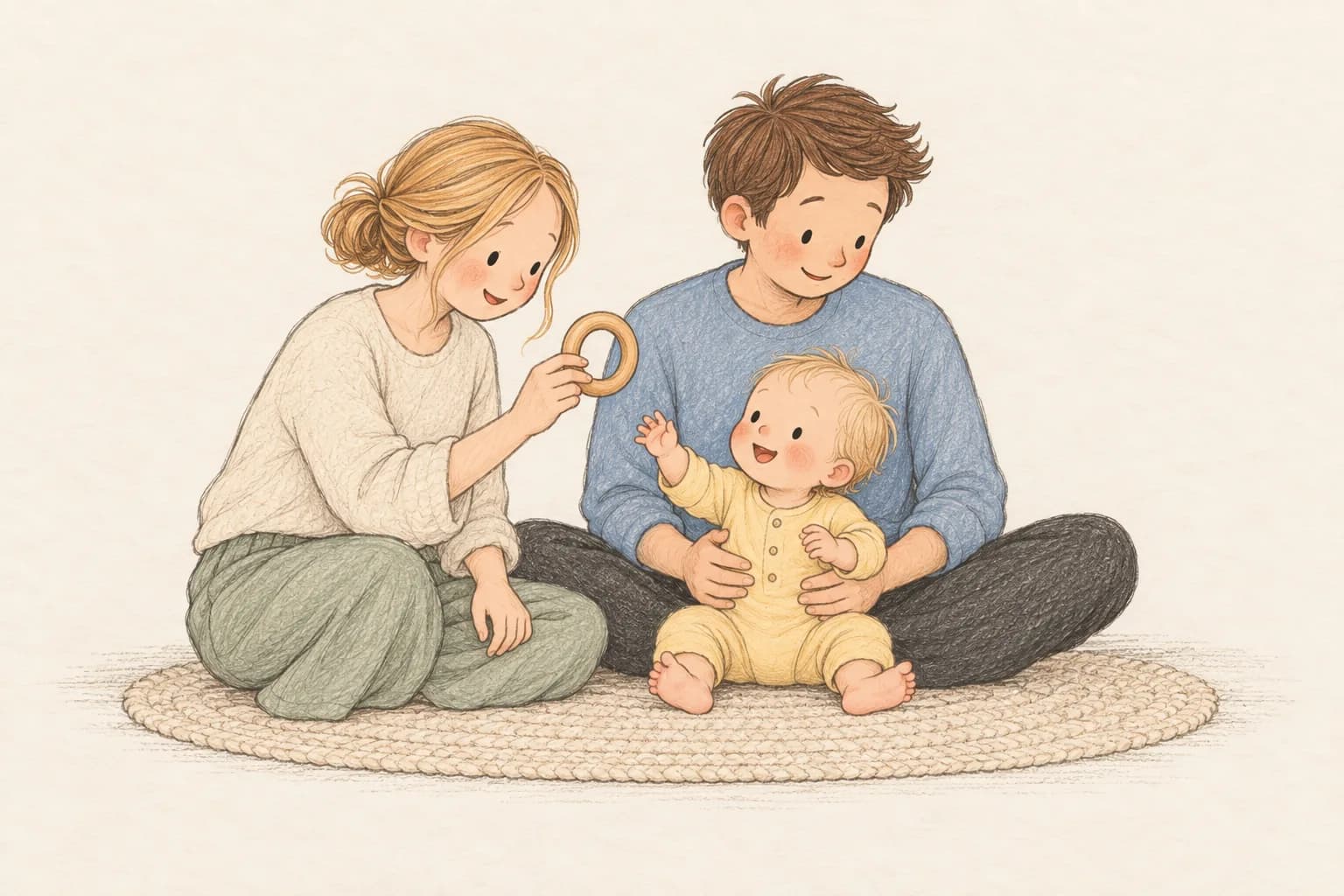
Supported sitting means your hands, body, or another appropriate support is helping your baby remain upright. A baby sitting between your legs while you support their trunk is still receiving help, even if the photograph looks very grown-up.
Sitting without support means your baby can maintain the position without someone holding them. Early sitting may still be wobbly, so close supervision remains necessary.
Getting into sitting describes the movement into that position. A baby who sits after you place them there has demonstrated a different skill from a baby who finds their own way up from the floor.
These distinctions also help when speaking with a clinician. “She sits” leaves out important context. “She stays sitting when I place her there, but I haven't seen her get into sitting herself” is a clearer observation. You do not need specialist vocabulary to describe what happens at home.
How to use the age guidance
The AAP's movement guidance for eight- to twelve-month-olds describes sitting without support around this stage and advises telling the pediatrician if a baby is not sitting independently by nine months. This is consistent with the CDC's nine-month checkpoint.
The CDC defines its milestones as skills at least 75% of children can do by an age. Its lists do not replace standardized developmental screening. That means two things can be true together: babies vary, and a missed milestone deserves a conversation.
Try not to use an early sitter in your family as the new expected deadline. Equally, avoid treating “everyone develops differently” as a reason to dismiss a persistent worry. A clinician can consider your baby's overall movement, medical history, and progress, rather than one skill in isolation.
If an appointment is coming up, bring a concrete question: “What support is appropriate now, and what should we look for next?” That usually leads to a more helpful discussion than asking whether your baby is ahead or behind.
What if my baby was born early?
For babies born prematurely, corrected age can help interpret early development. The AAP explains how corrected age is used during the first two years: subtract the number of weeks born before 40 weeks of pregnancy from the baby's age since birth.
For example, a baby born eight weeks early who is now 24 weeks old has a corrected age of about 16 weeks. This is an illustration of the calculation, not an individual developmental assessment. Ask the neonatal or pediatric team how to use it alongside your baby's follow-up plan.
Corrected age adds context. It should not delay asking about lost skills, a movement that worries you, or a change in how your baby is behaving.
Ways to make play useful and comfortable
Give your baby opportunities to move on a clear floor area while awake, with you nearby. Keep objects suitable for their age and too large to swallow. Your presence, a familiar voice, and one interesting object are enough for a simple play session.
The CDC's six-month activity suggestions include supporting a baby while sitting and letting them look around. Its nine-month suggestions include placing a toy slightly out of reach so a baby can explore moving toward it. Match the idea to what your baby can currently do, and help when they need you.
An example for a baby who still needs support: sit on the floor with them between your legs, keep your hands ready at their trunk, and let them look at a large toy you are holding in front. If they slump, become upset, or need more help, change position. You are sharing an activity, not measuring how long they can manage without you.
Make room for other positions too. Our tummy-time guide explains supervised awake practice, and our crawling guide covers later movement. Sitting does not need to become the only activity offered because it is the milestone you are waiting for.
Keep practice at floor level
A bed, sofa, or countertop is not a useful place to test a new sitter's balance. Choose floor-level play and stay close enough to prevent a topple. A ring of cushions does not take over the adult's job.
Look around the play space from your baby's level. A toy that was safely out of reach last week may be reachable after a lean or roll. Small objects and cords deserve another check whenever movement changes. The AAP's movement guidance emphasizes close supervision and keeping dangerous small items out of reach.
Avoid turning practice into repeated tests: moving your hands away for a photograph, repeatedly placing a falling baby back upright, or making them reach farther each time. If sitting still needs support, provide it. If you are unsure how, ask a health professional to demonstrate an appropriate position for your baby.
Does sitting mean my baby is ready for solids?
Sitting is relevant, but a single photograph does not establish feeding readiness. The CDC's guidance on starting foods includes sitting alone or with support and being able to control the head and neck, alongside other readiness signs. Starting complementary foods is usually around six months.
A baby does not have to master getting into sitting independently before every first food. At the same time, reaching a particular birthday does not make a slumped feeding position appropriate. Review the whole readiness picture and use a suitable, supported upright feeding setup. Our starting-solids guide walks through that separate decision.
When to contact your baby's clinician
Bring up a missed milestone, loss of a previous skill, or any concern about movement. Do not wait until a later birthday simply because another family was told to wait. Your baby's clinician can decide whether screening, an examination, or a referral would help.
Useful details include:
- What your baby does independently and where they need support.
- Whether they seem comfortable using both sides during play.
- Whether anything has changed or a previously reliable skill has disappeared.
- Any prematurity, medical history, or existing therapy plan.
A short video of ordinary play may help illustrate your question if your clinician wants one. There is no need to repeatedly provoke a difficult movement to capture it. Seek care first if your baby is unwell; recording a milestone should never become the priority.
Common questions
My baby sits when placed but cannot get into sitting. Is that the same milestone?
No. Maintaining the position and moving into it are distinct skills. Tell your clinician exactly what you see. The CDC lists both among nine-month milestones, so the distinction is useful at that visit and whenever you have a concern.
Should I buy a seat to teach sitting?
A supported pose in a product does not show that your baby can sit independently. Begin with supervised floor play and ask about appropriate support if needed. You do not have to buy equipment before you can offer opportunities to move.
Will learning to sit explain every new night waking?
One milestone cannot establish the cause of a sleep change. Note what else changed, including feeding, illness, and the daily routine. Our guide to changes in a baby's sleep routine helps organize those observations without turning a developmental event into a diagnosis.
Sources checked September 29, 2026. General education from the Bambii Editorial Team; not individually reviewed by a clinician. Read our editorial standards or send a correction to team@bambii.app. Cover illustration generated with AI.