


Baby development · 8 min read
Reading to Your Baby: When to Start and How to Make It Easy
Start sharing books from birth with simple pictures, responsive conversation, flexible routines, and practical ideas for wriggly babies.
Published by the Bambii Editorial Team
The short answer
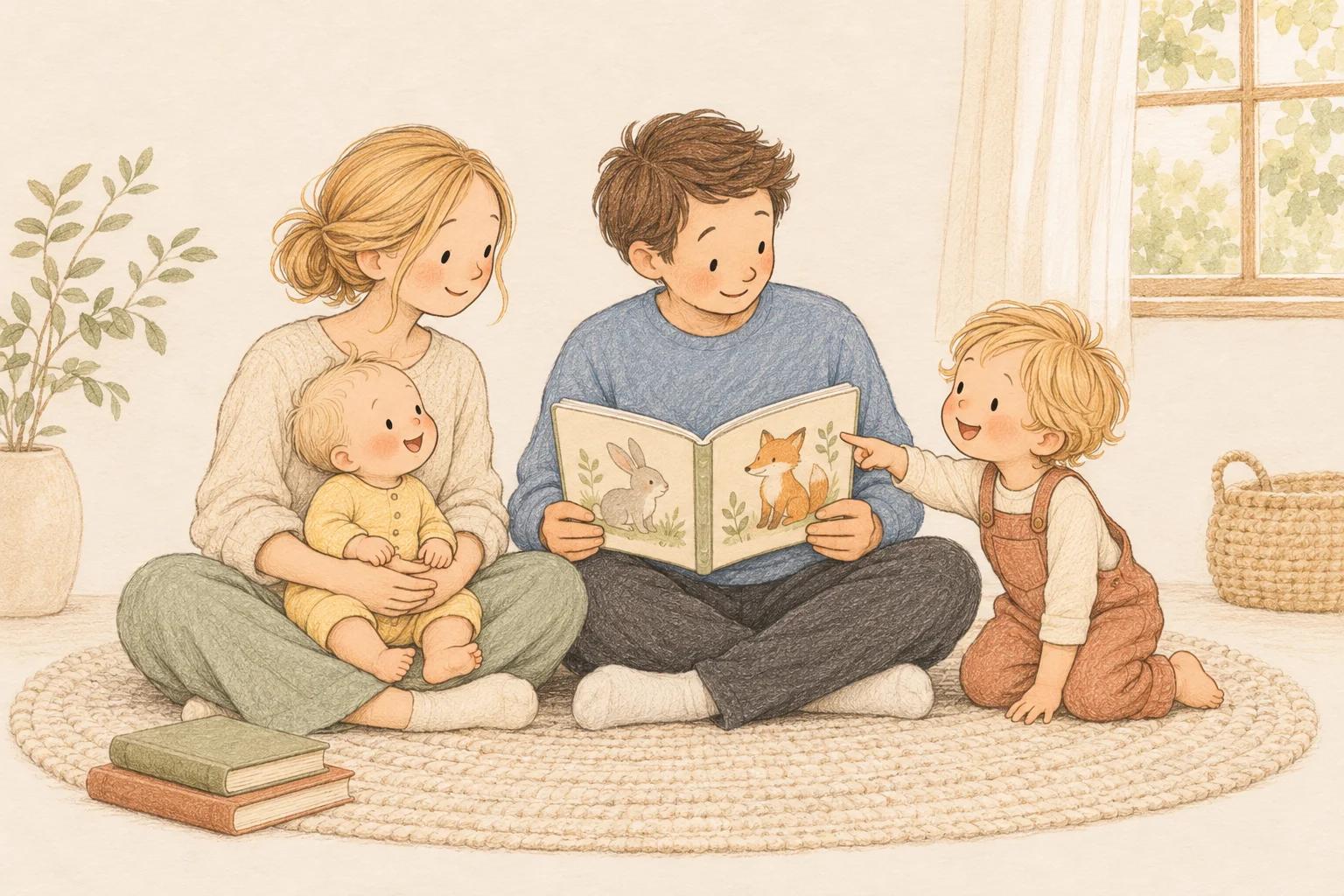
You can start reading with your baby from birth. Hold them comfortably, let them hear your voice, and share a few pictures or lines while they are interested. You do not need to finish the book or teach them to recognise words. The American Academy of Pediatrics recommends shared reading from the newborn period as a way to support connection, language, and early literacy.
If reading to a newborn feels a little odd at first, that is understandable. They cannot discuss the plot, and they may be more interested in your face than the page. That does not make the moment pointless. A book gives you something gentle to talk about together.
What shared reading means in the first year
Reading with a baby is closer to a small conversation than a performance. You might name one picture, make a sound, pause for a response, and turn back to a page they like. Sometimes the whole “story” is a picture of a duck and a few cheerful quacks.
The AAP's reading guidance emphasises the relationship and the back-and-forth interaction. It does not turn a number of books into a developmental guarantee. Reading is one part of a child's language environment, alongside everyday talk, play, and other support.
Our first-year language guide covers development more broadly. This article focuses on making books part of ordinary family life: choosing them, sharing them, and adapting when your baby is wriggly or tired.
Choose a small moment, not a reading target
Try a time when your baby is comfortable and you can give them your attention. That could be after a change, during a quiet awake period, or as one familiar part of winding down.
Keep the first attempt simple. Pick up a book, show a picture, and describe what you notice. If your baby looks away, arches, or becomes fussy, pause. The AAP's practical guide to sharing books encourages following these signals rather than finishing every story.
There is no need to add reading to every wake window. On a busy day, one small shared moment may be all that fits. On another day, you might return to the same book several times. These are flexible examples, not a required dose.
If your baby is hungry, feed them; if they need sleep, help them settle. A book should fit around care rather than delaying it. For other quiet activities, see what to do with a newborn when awake.
An easy way to share one page
Here is an original example you can adapt to almost any picture book:
- Notice: Look at what has caught your baby's attention.
- Name: Say something simple, such as “There's a little boat.”
- Add: Make one connection: “We saw a boat when we went for our walk.”
- Pause: Leave room for a look, movement, or sound.
- Follow: Stay with that picture, turn the page, or stop.
This is an example of a conversation, not a checklist to complete. Your baby does not need to respond in a particular way.
You can also make up a tiny story about an ordinary picture. A page showing a cup might become: “A cup for the teddy. Teddy is sitting with his family.” You do not need a special voice or a polished ending.
If another caregiver reads the same page differently, that is fine. The family does not need a shared script. What you can share is what the baby seems to enjoy: “He keeps looking at the red boat,” or “She likes it when we make the animal sound.”
Let books change with your baby
Young babies may mostly listen, gaze, or react to your voice. As they grow, they may reach, pat, mouth, or help turn pages. ZERO TO THREE's book-sharing guide describes these changing ways of exploring books. They are broad patterns, not pass-or-fail age deadlines.
For a young baby, try a simple page while their head and body are fully supported. There is no need to prop them into sitting before they can manage it.
For a baby who reaches for everything, a sturdy board book or suitable cloth book may be easier to share. Let them explore while you stay involved. Choose intact, age-appropriate books and remove one if a damaged part could come loose.
For a baby who enjoys turning pages, let the story jump around. You can describe whichever page is open. The book does not have to proceed from front to back to be useful.
If your baby wants the same picture again, you do not have to introduce a new title immediately. Familiarity can be part of the enjoyment. A small home collection can still offer lots to talk about.
Choose books for the interaction
Raising Children Network suggests simple pictures, faces, rhymes, repetition, and sturdy pages. Everyday themes such as meals, animals, bathing, or family life give you easy things to name.
When you are choosing, ask:
- Can we comfortably hold and explore this together?
- Are the pictures clear enough to talk about?
- Is it suitable for the way my baby currently handles objects?
- Is there something here I would enjoy reading more than once?
You do not need a particular brand, educational claim, or expensive set. A library can help you try different books before deciding what you enjoy. Ask about baby sessions and borrowing options where you live.
A useful first collection might contain a book of faces, one about familiar objects, and a short rhyming story. That is an illustrative mix, not a ranked list of the “best” books. Your baby's preferences can guide what comes next.
Read in the language that feels natural
You can read, tell stories, and talk about pictures in the language you feel most comfortable using. Raising Children Network explicitly supports this approach.
The printed language does not have to dictate every word you say. You might describe a picture in Polish, repeat a family phrase in English, or tell the story in another language used at home.
For a family example, one parent reads the printed sentence while a grandparent describes the same scene in their own words. Both can make the book a place for connection. Nobody needs to correct the other adult's storytelling style to keep a routine consistent.
If reading print is difficult for you, talking about the illustrations is a valid way to share the book. You can also ask a librarian or early-years professional for accessible options that fit your family.
What if my baby chews the book or crawls away?
Mouthing, touching, and returning to favourite pictures can be part of exploring books. ZERO TO THREE reminds parents that early book-sharing does not look like an older child sitting through a complete story.
Use a book designed for your baby's stage, supervise, and keep damaged books out of reach. If the baby moves away, close the book or leave the story for another moment. You do not need to hold them in place for a reading target.
Try asking a more useful question than “Why won't my baby listen?” For example: “Were they tired?” “Did they want to move?” “Would one picture have been enough?” These observations help you adjust the moment without treating book preferences as a diagnosis.
If you have concerns about your baby's development, discuss them with their healthcare professional. CDC guidance encourages families to act on developmental concerns. More reading is not a substitute for assessment.
Books at bedtime, without promises
A short book can be one familiar wind-down cue. The Bambii Sleep Academy describes flexible routines; books need not become another step that must happen perfectly.
An illustrative evening might include a needed feed, a change, a familiar page or song, and settling support. On a difficult evening, you might leave out the book. Neither example promises fewer night wakes.
Once sleep begins, keep books and other objects out of the cot and use the usual safe sleep setup. NIH guidance calls for a clear sleep surface. A favourite bedtime book belongs with the caregiver, not beside a sleeping infant.
Questions parents ask
Is it too late if we did not start at birth?
No. Start with a small, enjoyable moment now. You do not need to compensate with long sessions or a stack of books.
Are videos of someone reading the same thing?
The AAP recommends shared print-book experiences and emphasises interaction. A recording does not automatically provide the responsive exchange you can have with your baby. If using audio or digital material, stay involved and talk together.
How many minutes should we read?
This guide does not prescribe a daily minute target. Aim to make shared reading a familiar opportunity, and follow your baby's interest and comfort.
Do I need to read every word?
No. You can talk about one picture, repeat a sound, or tell your own small story. Sharing the experience matters more than reaching the last page.
Sources checked November 12–13, 2026. General education; not individually reviewed by a clinician. Read our editorial standards or send a correction to team@bambii.app. Cover illustration generated with AI.