


Baby sleep · 7 min read
Why Do Babies Cry in Their Sleep? What to Notice and How to Respond
Why babies cry in their sleep, how active sleep can look, when to respond, and which changes need medical attention.
Published by the Bambii Editorial Team
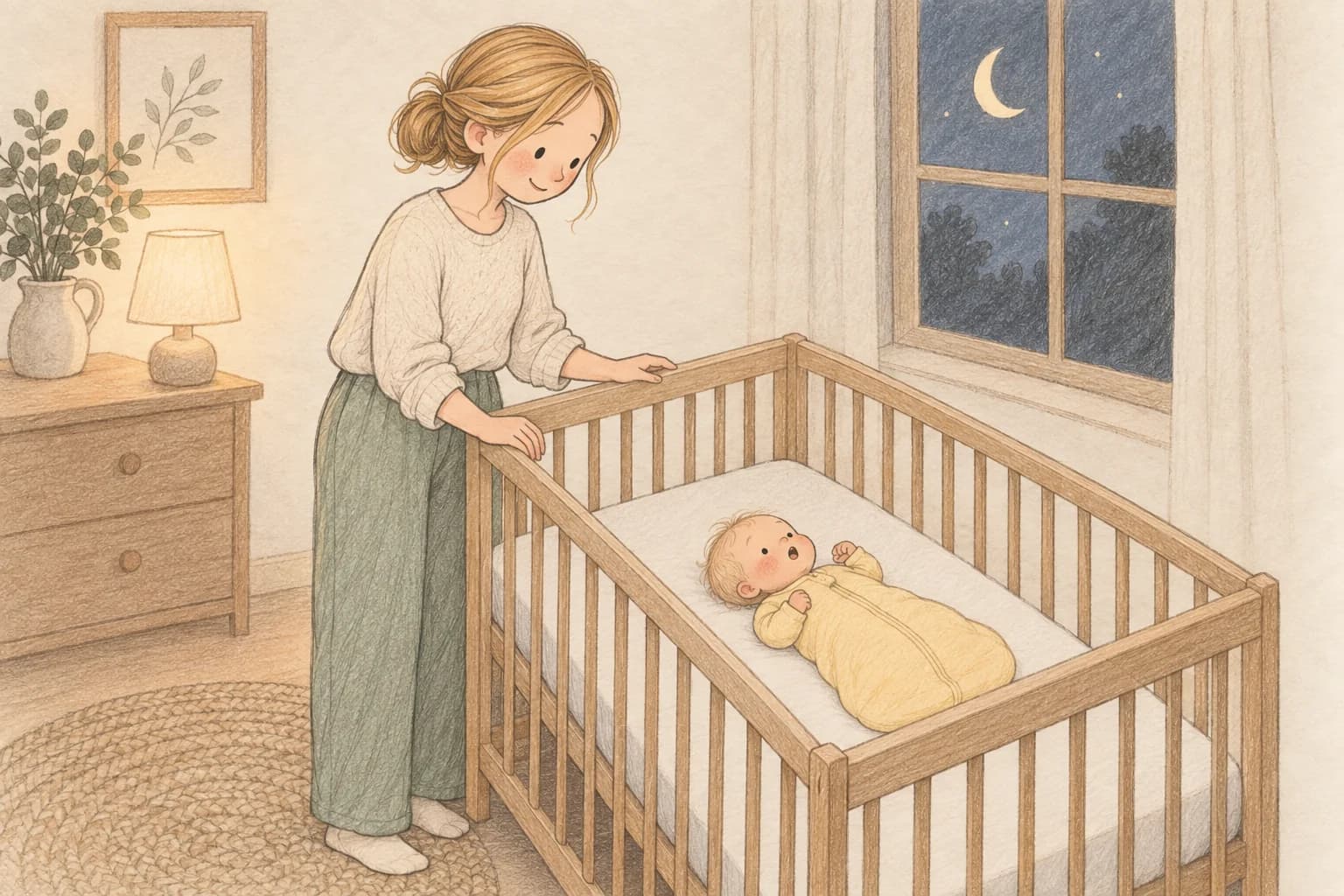
You have finally put your baby down. Their eyes are closed, the room is quiet, and you are halfway through the hopeful thought that you might get some rest. Then comes a squeak, a grimace, and a small cry. Are they awake? Hungry? Uncomfortable? Should you pick them up?
Babies can make noises and brief cries while sleeping or moving toward wakefulness. But a cry alone cannot tell you why it is happening. The useful first step is to look at your baby, then respond to what you see. This guide explains active sleep, how to distinguish a passing sound from a baby who needs you, and which signs deserve medical attention.
Why do babies cry in their sleep?
Active sleep can look surprisingly busy
Newborn sleep does not always resemble the still, silent picture on a baby-monitor advertisement. During active sleep, a baby may move their limbs, flutter their eyelids, or make sounds. The American Academy of Pediatrics describes these movements in its guide to newborn sleep stages. Eyes being closed does not necessarily mean a baby is in deep sleep.
A short sound that stops, with your baby otherwise looking comfortable, may be part of that transition. You do not need to decide which sleep stage they are in. You are simply checking whether this is a passing noise or a developing need for care.
Sometimes your baby is waking and asking for something
A baby can begin stirring before their eyes fully open. Hunger, a dirty diaper, discomfort, or a need for closeness may become clearer as they wake. That is why “their eyes are closed” is not a reason to ignore ongoing crying.
Look at the whole moment: does the sound stop, or grow stronger? Is your baby beginning to root or bring their hands toward their mouth? Do they seem uncomfortable? Your baby does not need to finish waking up before you can help.
A sound cannot diagnose reflux, gas, or a nightmare
It is tempting to attach an explanation to every noise, especially after searching online at 3 a.m. But a recording of a cry does not establish a cause. Neither does the fact that it happened after a feed. If you suspect discomfort, describe what actually happened to your clinician: when it started, whether feeding changed, and what other symptoms you noticed.
There is no need to give a harmless-sounding moment a dramatic label. There is also no need to talk yourself out of a concern because somebody called it “just active sleep.”
What to do when you hear a sleepy cry
1. Look before changing anything
If it is a brief sound and your baby appears comfortable, take a moment to observe. Check their position, breathing, and usual skin color. This is a quick check, not a timed waiting exercise or a rule that you must delay comforting them.
For example, your baby gives one small squeak, stretches, and becomes quiet again. You may decide no change is needed. On another night, their cries build and they begin searching for a feed. That is a different situation, even if both started with the same sound.
2. Respond when the crying continues or a need becomes clear
Offer your usual care: feeding when hungry, checking the diaper, or holding and comforting your baby. Keep the surroundings calm if it is nighttime. You can attend to them without turning on every light or beginning a play session.
For a young newborn, follow any feeding plan your care team has given you, including waking for feeds when advised. Raising Children Network notes that premature babies and babies with growth or health concerns may need individualized overnight feeding guidance. A quiet baby is not a reason to override that plan.
3. Keep the sleep setup simple
Return your baby to their own firm, flat sleep surface, on their back, with a fitted sheet and no loose objects. Do not add a pillow, positioner, or inclined cushion to solve noisy sleep. See the AAP's safe-sleep guidance.
If you are too tired to keep holding your baby safely, put them down in their safe sleep space and ask another awake adult for help if available. You do not need to achieve perfect settling before protecting both of you from an exhausted moment.
What is worth noting—and what you can leave out
You do not need an overnight transcript of every grunt. If a pattern worries you, a few factual notes can make a conversation with your pediatrician easier.
- Note whether the sound was brief or became sustained crying.
- Record whether your baby woke fully and whether they fed.
- Add any unusual symptoms, such as vomiting or a change in breathing.
- Write down what you tried and what happened next, without assuming why it helped.
“Brief cry, eyes closed, quiet again without help” says more than “bad sleep.” “Woke crying, fed, settled in crib” describes a different event. Neither note needs a score.
Bambii's guide to what to track for baby sleep can help you choose a manageable level of detail. If the logging itself is keeping you awake or making you check repeatedly, simplify it. The purpose is to support care, not create another nighttime job.
When crying or noisy breathing needs medical attention
Get emergency help if your baby has difficulty breathing, turns blue or gray, becomes unresponsive, or is very difficult to wake. Grunting with effort on each breath is different from an occasional sleepy sound. The NHS urgent-help guide describes these warning signs.
A baby under three months with a temperature of 38°C / 100.4°F or higher needs urgent medical assessment; see NHS fever guidance. Contact your baby's clinician promptly for poor feeding, fewer wet diapers, persistent unusual crying, or any change that concerns you. Do not wait for a sleep log to prove there is a problem.
Common questions at the crib side
Should I wake my baby whenever they make a noise?
Not necessarily. A brief noise in an otherwise comfortable baby is different from continuing distress. Check them and use what you observe, while following any clinician-directed feeding schedule. You can comfort your baby whenever they need you.
Does crying with closed eyes mean a nightmare?
You cannot tell from that sign alone. Keep your response focused on comfort, feeding needs, and whether your baby seems well, rather than trying to interpret a dream.
Can a tracker tell whether the crying is normal?
No. A tracker can help you remember timing and describe a pattern. It cannot assess breathing, rule out illness, or determine why your baby cried.
A calmer way through the next wake-up
The next time you hear a sleepy sound, you do not need to solve infant sleep in one moment. Look at your baby, respond to their needs, and keep their sleeping space safe. If you are worried, ask for help. If the sound passes and your baby looks comfortable, you can let the moment pass too.
For an ongoing routine question, explore Bambii's sleep and feeding tracker or our guide to helping an overtired newborn settle. A few clear observations are often more useful than a night spent guessing.
Sources checked September 24, 2026. Cover illustration generated with AI.