


Baby development · 8 min read
Separation Anxiety in Babies: Calmer Goodbyes and Caregiver Handovers
Plan warm, predictable goodbyes and responsive caregiver handovers, understand common separation anxiety, and know when to ask for support.
Published by the Bambii Editorial Team
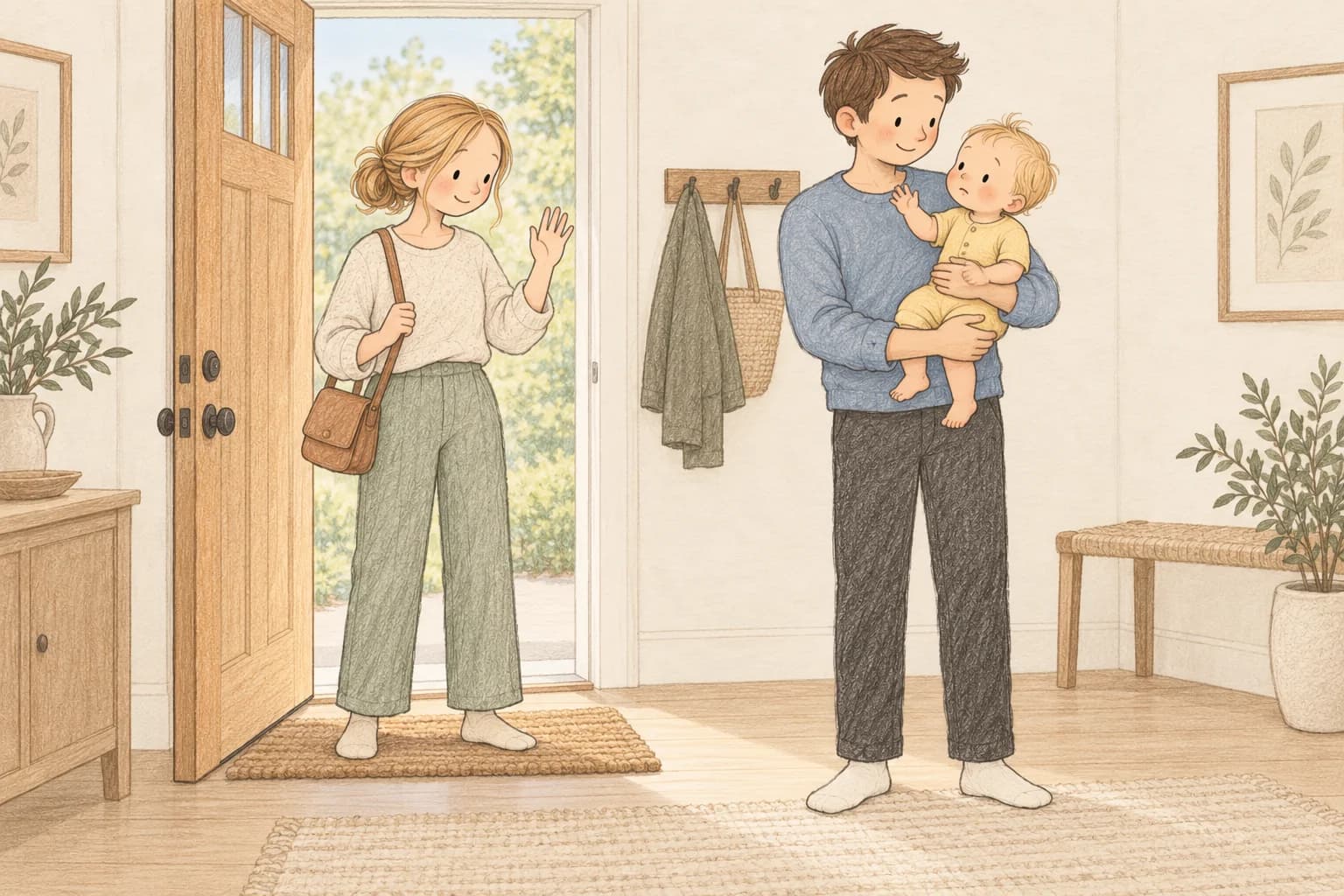
Separation anxiety is common in babies and young children, particularly between about six months and three years. A familiar caregiver, a short predictable goodbye, and opportunities to become comfortable together can help. Your baby does not need to stop having feelings before another trusted adult can care for them, and you do not need to disappear without saying goodbye.
The hard moment may arrive when you put on your shoes, pass your baby to a grandparent, or reach the nursery door. A child who seemed happy a few minutes earlier may cling or cry. That can feel especially confusing if handovers used to be easy.
This guide focuses on daytime separations and practical care arrangements. It does not prescribe leaving a baby to cry alone, and it is not a sleep-training method.
What separation anxiety can look like
The NHS separation-anxiety guide describes clinginess and crying when a parent or familiar carer leaves, or around unfamiliar people. It explains that this is a common developmental experience, rather than evidence that a parent has caused a problem by offering care.
The intensity can vary. One baby may object when a parent leaves the room; another may be comfortable with a familiar relative but upset at a new nursery. The question is not simply whether tears occur, but what happens around them and whether the child receives responsive care.
Write down the specific transition that is difficult: leaving the house, changing arms, entering a noisy room, or saying goodbye after a long settling visit. That detail gives you and the caregiver something concrete to discuss.
Do not use one difficult handover to grade your bond or your parenting. It is information about that moment, not a verdict on your family.
Introduce the caregiver before the rushed goodbye
When possible, give your baby some time with the person who will care for them while you are still present. A familiar song, a shared book, or ordinary play on the floor provides a simple starting point.
You might sit nearby while the caregiver follows your baby's interest. Then let that adult take part in routine care, with your guidance about feeding, comfort, and safety. There is no need to create a test in which the baby must accept every task from the new person immediately.
For nursery or daycare, ask how settling visits work and who will usually receive your child. Explain what has helped at home without expecting every setting to reproduce your living room exactly.
An example question is: “Could the same person greet him when possible, and could we agree on how you will comfort him after I leave?” That is more actionable than asking a caregiver to guarantee a tear-free start.
Practise small separations with support available
Both the NHS and American Academy of Pediatrics suggest practising brief separations with a trusted caregiver and building familiarity. This is an opportunity to experience care from someone else, not a requirement to tolerate distress for a fixed number of minutes.
A first attempt might involve stepping into another room while your baby stays with a familiar adult. Agree beforehand that the adult will respond, and that you will return if the situation needs you. Adjust the plan to what you observe rather than following a timer through escalating distress.
There may be days when practice is not useful. If your baby is ill, hungry, or exhausted, meet those needs first. The AAP notes that these circumstances can make separation harder.
If a return to work is close and there is little preparation time, use what is possible. One thoughtful handover and a clear care plan are still valuable. Parents do not always have a long settling-in period, and that is not a personal failure.
Make the goodbye brief, warm, and honest
Choose a short sequence you can repeat: a cuddle, one familiar phrase, and a handover to the caregiver. The AAP recommends consistent goodbye rituals and explaining your return in a way a child can understand.
For a younger baby, your familiar voice and the repeated sequence may matter more than the exact words. For a toddler, connect your return to something concrete you can genuinely promise, such as after lunch, rather than an abstract time on the clock.
An example is: “One cuddle, then you're staying with Dad. I'll come back after your snack.” Use words that fit your family. Avoid saying “just one minute” if you will be away for several hours.
Do not make crying a reason for a lecture, a threat, or a demand to be brave. The receiving adult can acknowledge the feeling: “You wanted Mum to stay. I'm here with you.” That is an example of kind language, not a script that guarantees the tears will stop.
Agree what happens after you leave
A goodbye plan is incomplete if nobody knows what support comes next. Ask how the caregiver will comfort the baby, offer familiar activities, respond to feeding or tiredness cues, and contact you if needed.
Agree on a realistic update. It might be a short message once the child has settled into care, or a call if distress remains intense and the caregiver needs a different plan. There is no universal amount of crying that every family should accept before communication.
Make sure the caregiver can distinguish upset at separation from a possible health issue. A baby who seems unusually unwell needs assessment; labelling the day “separation anxiety” should not close down that possibility.
For parents, knowing what will happen can make leaving less uncertain. You can say: “Please tell me how she was after the handover, not only whether she cried at the door.” That invites a fuller account of the child's day.
Build a handover that helps both adults
Keep the practical information short enough to use. Include the last feed and sleep, current health concerns, usual comfort approaches, and how to reach you. Add any individual medical or feeding instructions that the caregiver needs.
For example: “He slept later than usual today. His last feed was at 8:10. He enjoys looking at this book with someone sitting beside him. If he becomes very upset, please comfort him and contact me so we can decide what he needs.” Replace the details with your baby's actual situation.
Avoid handing over only an ideal timetable. A caregiver also needs permission to respond when the real day looks different. Our guide to what to track for baby sleep explains how a few observations can be more useful than a long record.
If you use a shared log, keep it factual. “Cried during goodbye; accepted a cuddle; played with the book later” is more informative than “bad separation day.” It records the care and recovery as well as the difficult moment.
Keep comfort objects separate from infant sleep safety
A familiar, age-appropriate toy may be part of supervised awake play. That does not make it suitable to leave in an infant's cot. Do not use a parent's scarf, loose blanket, pillow, or soft toy as a sleep solution for separation anxiety.
Follow AAP safe-sleep guidance: place your infant on their back on a firm, flat surface, with a fitted sheet and no loose bedding or soft objects. Share this clearly with any new caregiver.
You can preserve familiarity through the adult's voice, a song, and responsive care while keeping the sleep space clear. The comfort plan and the safe-sleep plan should work together.
Make room for reconnection
When you return, begin with your child rather than a performance review of the goodbye. Offer attention and whatever ordinary care they need. There is no requirement to compensate with an elaborate outing or new toy.
Ask the caregiver for useful details when you can listen: what helped, whether feeding and rest were manageable, and whether anything needs changing next time. Choose one practical adjustment rather than rewriting the entire arrangement after every difficult day.
If bedtime is also unsettled, keep that question separate. Our 8-month sleep-regression guide discusses sleep in that developmental period. The Bambii Sleep Academy offers general education about connection and routines, but neither resource can assess a persistent anxiety concern.
When to ask for more help
The NHS recommends speaking with a health visitor if a child remains very distressed for a long time after you leave or the problem continues for more than a few weeks. You can ask sooner if you are concerned or the care arrangement is not working.
Describe what happens before, during, and after separation, who is caring for the child, and what has already been tried. Ask whether health, development, the environment, or the transition plan needs further attention. You do not have to arrive with a diagnosis.
Common questions
Have I made my baby too attached by comforting them?
Common separation anxiety is not evidence that offering comfort has damaged your baby. Keep care responsive and seek support if the distress is persistent or concerning.
Should I sneak out while my baby is distracted?
Use a brief, clear goodbye instead. Let the receiving caregiver provide comfort and follow the plan you have agreed together.
What if my baby cries every time I leave?
Look beyond the doorway moment. Discuss how long distress continues, what support helps, and how the rest of the day goes. Persistent or intense distress deserves a conversation with your child's healthcare professional, rather than an instruction simply to push through it.
Sources checked October 8, 2026. General education from the Bambii Editorial Team; not individually reviewed by a clinician. Read our editorial standards or send a correction to team@bambii.app. Cover illustration generated with AI.